
Interactive homes, US edition
Every watt has a story.
Explore 10 homes in 3D and see what every appliance, bill and room costs to run.
Step inside the house- The model
- Three floors, open cutaway
- Inside
- Rooms, furniture & appliances
Preparing the house
Understand your home.
Understand your energy.
- 01
Explore
Step inside ten different homes, from a city apartment to a family house, and see where electricity is actually used.
- 02
Understand
Learn what everyday appliances draw, and what that means for a typical household bill.
- 03
Compare
Put devices side by side to see which choices make a real difference over a year.
Calculate what your home costs to run
Explore 12 free calculators for electricity, heating, cooling, water, appliances, and everyday household expenses. Enter your own numbers to get estimates based on your usage and utility rates.
From the blog
Guides that explain the numbers behind your bills.
How Home Energy Lab works
From everyday energy use to real-world utility costs.
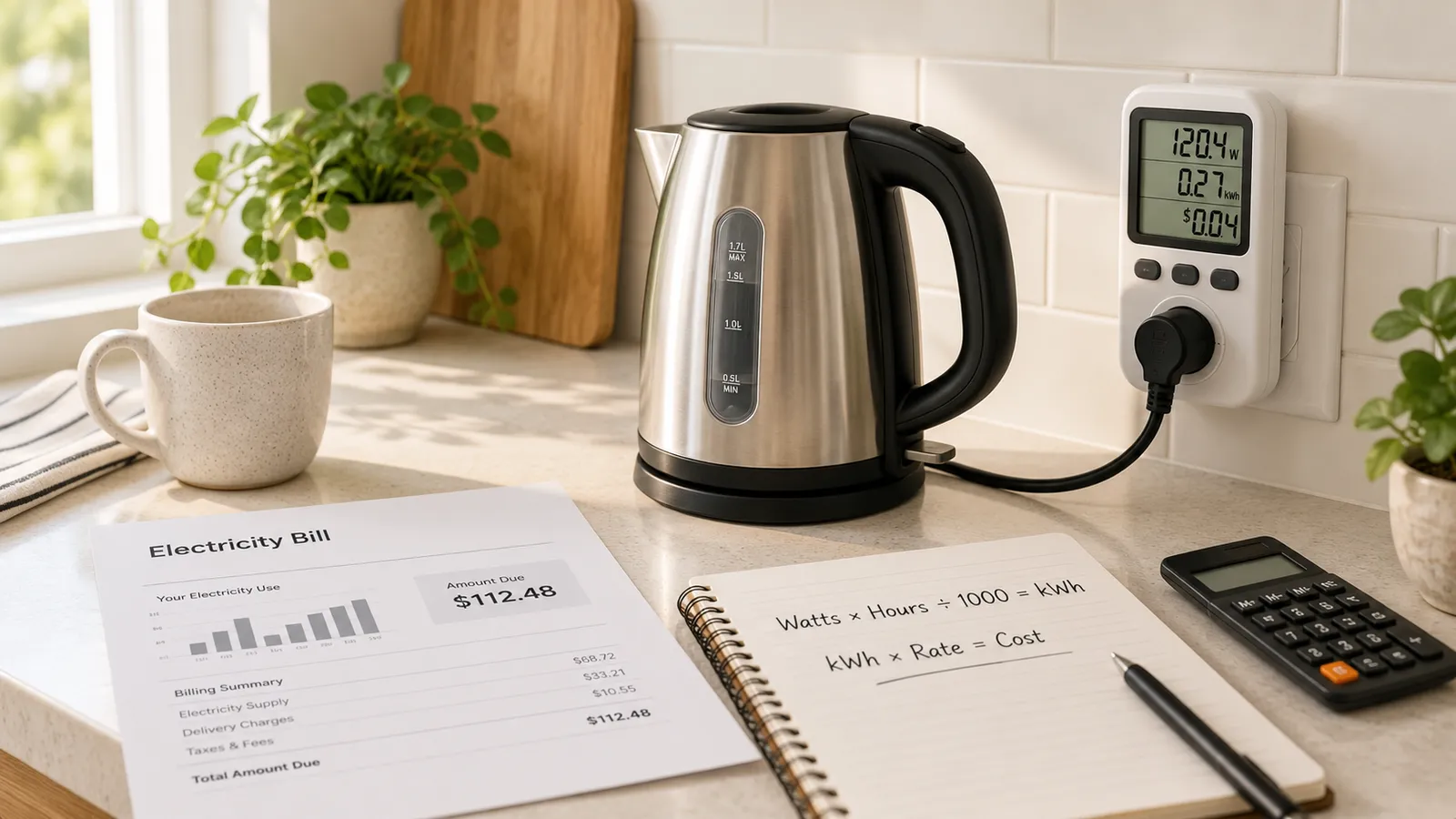
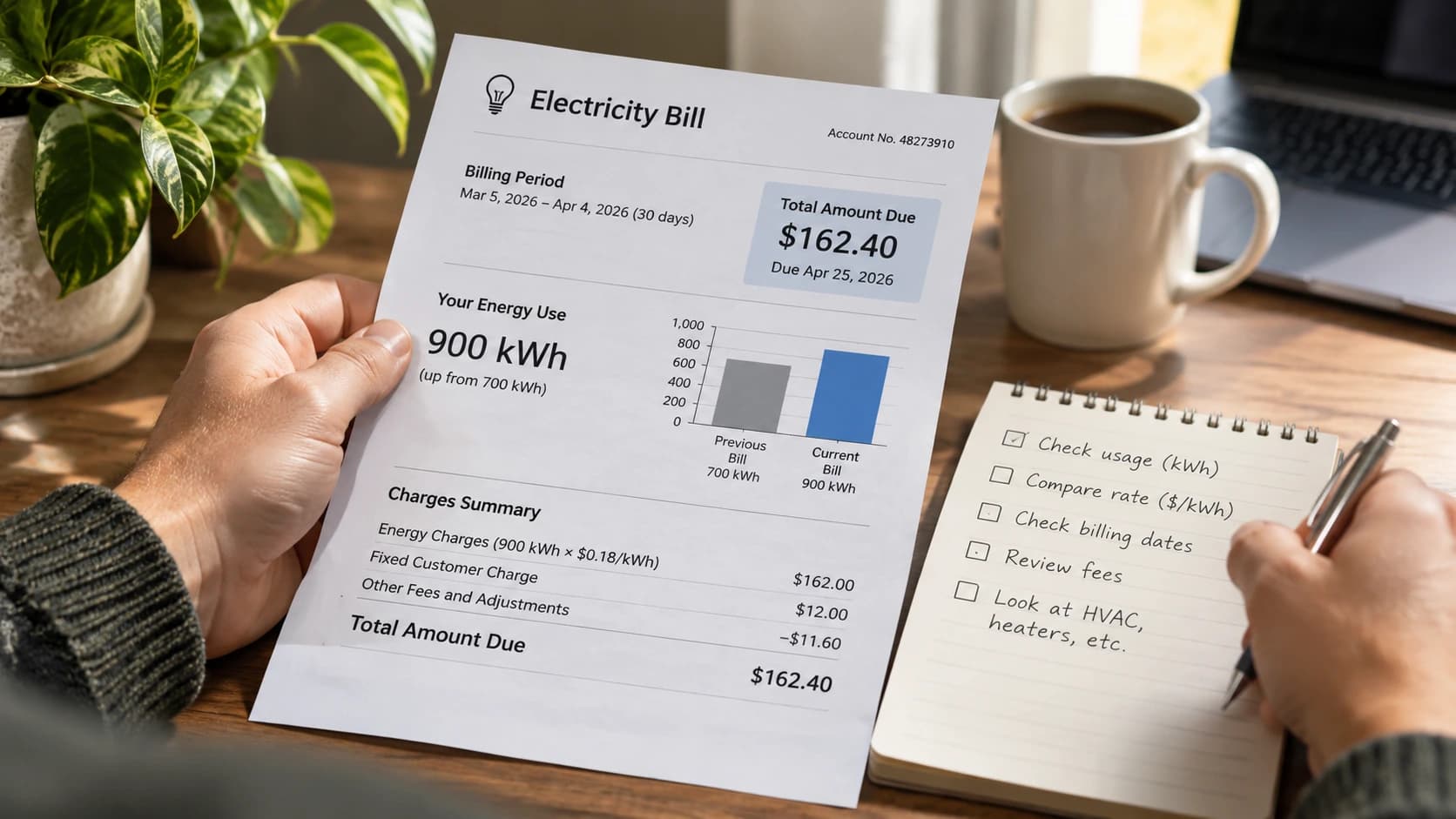
Electricity is a good place to start. Most electrical appliances follow a simple calculation: how much power they use, how long they run, and what you pay for electricity.
01 — Power
Watts
How much electrical power a device uses while running. Find its wattage on the label, in the specifications, or with an energy-monitoring plug.
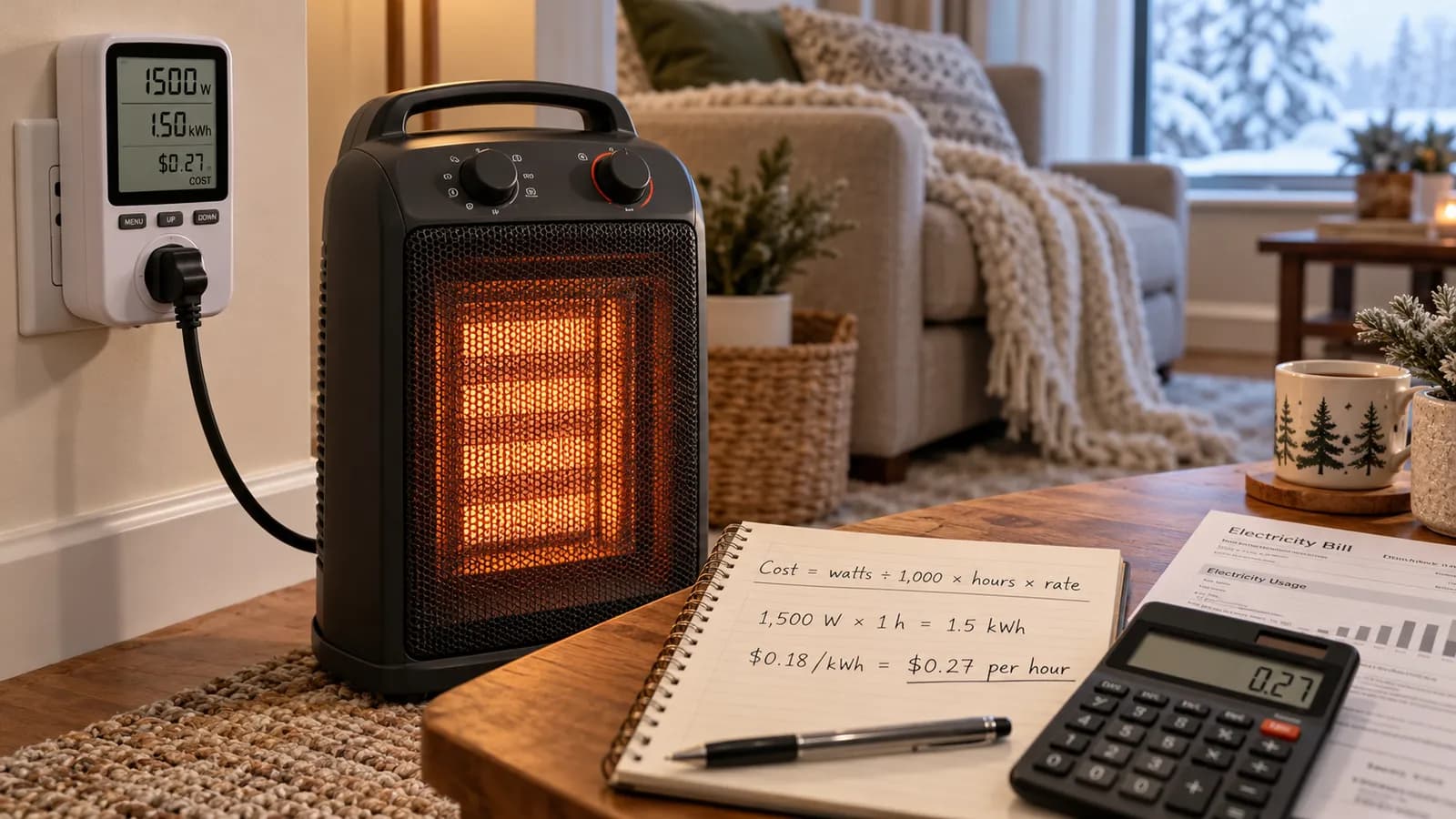
1,500 W space heater
02 — Energy
Kilowatt-hours
Power multiplied by running time. Kilowatt-hours (kWh) measure electrical energy consumption and are commonly used to calculate electricity charges.
1,500 W × 1 hour = 1.5 kWh
03 — Cost
Dollars
Multiply the energy consumed by your electricity rate to estimate the usage cost.
1.5 kWh × $0.175/kWh ≈ $0.26
More than electricity
Not every household expense is measured in kilowatt-hours.
Home Energy Lab also helps estimate natural gas costs using therms or CCF, water and sewer charges using gallons or CCF, and heating expenses based on fuel prices and equipment efficiency.
Our calculators account for relevant factors such as thermostat cycling, appliance efficiency, fixed utility charges, and usage patterns.
Different utilities. Different formulas. One goal: clearer household costs.